Oil markets initially treated the Iran war as a brief bullish disruption in a long-term bearish trend. But traders are now betting that oil prices will remain elevated through 2028, forcing a rethink of the global inflation outlook.
Eight months into the war, the buffers that helped absorb the initial energy shock – most notably onshore crude oil stockpiles – are wearing dangerously thin. At the same time, the recovery in crude exports through the Strait of Hormuz remains fragile, global refining capacity has been eroded and credible diplomatic pathways to end the conflict appear narrower than ever.
Global benchmark Brent crude futures tell the story. Contracts for delivery in December 2027 LCOZ7 have climbed more than 13% since the start of September to $86 a barrel, the highest level for the contract, while December 2026 contracts LCOZ6 have gained around 12%.
The Brent forward curve is not a price forecast, of course. But it reflects the willingness of refiners, airlines, commodity traders and asset managers to lock in elevated prices months and even years into the future. In effect, market participants are paying a premium against the possibility that today's disruptions will become tomorrow's normal.
Supply Recovery
This market positioning stands in stark contrast to widely held industry expectations of a recovery in global oil supplies next year.
The International Energy Agency projects global supply will rise to 108.3 million barrels per day (bpd) in 2027 from 100.7 million bpd this year as Middle Eastern exports recover.
Demand, meanwhile, is forecast to increase from 102.4 million bpd to 104.4 million bpd next year, still slightly below 2025 consumption. This recovery is expected to be concentrated in petrochemical feedstocks rather than transportation fuels like diesel.
Regardless, the agency's projected balances imply a sizeable supply surplus next year that would normally weigh on prices. Yet the steady rise in long-dated futures suggests investors are increasingly sceptical that this recovery will fully materialise or, if it does, that it will endure.
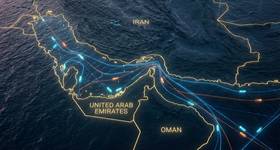
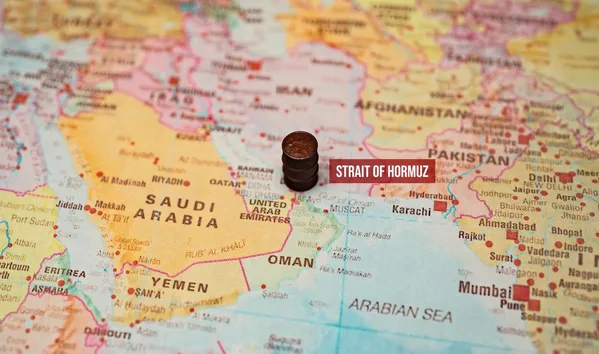
The standoff between Washington and Tehran remains centred on control of the Strait of Hormuz. While oil flows through the strategic waterway have rebounded to near pre-war levels in recent weeks thanks partly to US naval support, Iran has intensified attacks on vessels in the past week and threatened further disruption.
The conflict has also expanded beyond the Gulf. Yemen's Iran-aligned Houthis have recently stepped up missile and drone attacks on Saudi Arabia, including strikes this week on the headquarters of Saudi Arabia's state-owned oil giant Aramco 2222.SE in Dhahran.
Given this backdrop, every barrel leaving the Gulf now carries a widening security premium. Complex logistics, elevated freight rates, high insurance costs and military protection now account for nearly a third of the cost of moving a barrel of oil out of the region, compared with 3% before the war.
Absent a durable settlement over Hormuz, much of that cost is likely to remain entrenched in prices for the foreseeable future.
Diesel On Fire
The strain is even more visible in diesel markets.
Benchmark European diesel futures LGOc1 hit a record $1,480 per metric ton, equivalent to around $210 per barrel, in mid-September amid an acute shortage of supplies caused by disruptions in the Middle East and Russia.
Since Russia's 2022 invasion of Ukraine, drone attacks by Kyiv have crippled Russian refineries, forcing Moscow to ban diesel exports earlier this year.
US President Donald Trump on Friday announced an agreement with Russian President Vladimir Putin to allow Moscow to resume some diesel exports and later proclaimed another “energy ceasefire” between Russia and Ukraine.
But the additional Russian exports cited by Trump are minuscule – equivalent to roughly 12 hours of global supply – and no one, including the two parties involved, is giving much credence to the purported ceasefire.
Instead, traders are focused on the dramatic loss of fuel production capacity this year, with diesel futures signalling continued tightness ahead. Contracts for delivery in December 2027 climbed above $1,000 a ton for the first time this week, compared with a pre-war level of $644.
The fuel repricing may ultimately prove more important than the rise in crude itself. Diesel powers the trucks, ships, factories and farms that underpin global commerce. Sustained diesel inflation has historically seeped into the wider economy through higher transportation, manufacturing and food costs.
With headline US inflation running at 3.7% in September – almost twice the Federal Reserve’s targeted 2% rate – and core inflation creeping up, persistently high diesel prices remain a major concern for US and global policymakers.
A New Reality
For much of this year, energy markets operated on the assumption that the Iran war would resemble past geopolitical crises: a sharp but temporary disruption followed by a quick return to normality.
Increasingly, investors are concluding otherwise. The issue is no longer simply how much oil can move through Hormuz. Markets need to know whether the global energy system can quickly rebuild the inventories, refinery capacity and supply chains damaged by months of conflict.
Until then, the world risks becoming trapped in an era of structurally higher energy costs that lasts long after the shooting stops.
(The opinions expressed here are those of Ron Bousso, a columnist for Reuters.)
(Reuters, By Ron Bousso)





AOG Digital E-News is the subsea industry's largest circulation and most authoritative ENews Service, delivered to your Email three times per week