U.S. President Donald Trump went into the Iran war convinced that America’s vast oil wealth would insulate the country from the kind of energy shock now battering much of the world. Four weeks into the conflict, that shield is looking fragile.
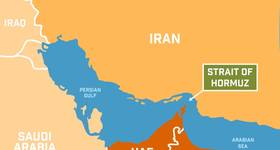
Trump’s wager has only partly paid off. U.S. oil prices have risen less sharply than those elsewhere since U.S.-Israeli air strikes against Iran on February 28 ignited a regional war that rapidly engulfed the Middle East’s energy infrastructure, blocking the Strait of Hormuz and cutting off roughly a fifth of global oil and gas flows.
Brent crude LCOc1, the global benchmark, has surged about 55% since late February to around $110 a barrel, while U.S. West Texas Intermediate CLc1 has climbed 50% to around $99. The divergence between the two benchmarks recently hit its highest in a decade, excluding a brief spike during the COVID-19 pandemic.
This gap reflects a structural shift in energy markets. The U.S. is now the world’s largest producer of oil and gas and exports more energy than it imports, thanks to the shale boom of the past 15 years. While U.S. refiners still import crude to optimise operations – including some Middle Eastern grades that accounted for roughly 4% of consumption last year – America’s direct exposure to the Gulf is far smaller than that of Asia or Europe.
Asia is the most vulnerable region, relying on the Middle East for about 60% of its oil imports. The sudden disruption forced oil refiners to cut run rates and governments to roll out fuel subsidies and conservation measures at enormous economic cost. Physical crude prices for imports into the region recently soared above $150 a barrel.
A Shrinking Buffer
America’s relative advantage, however, is eroding fast.
With Middle Eastern supplies constrained, buyers in Asia and Europe are increasingly turning to alternative sources – including the U.S. – for crude oil, refined fuels and natural gas. That global scramble is pulling more U.S. hydrocarbons into the international market and tightening supplies at home.
U.S. crude exports are on track to hit a record 4.6 million barrels per day in March, according to analytics firm Kpler. Exports of refined products, mainly gasoline and diesel, are also expected to reach an all-time high of about 3.2 million bpd.
The lesson is blunt: in interconnected oil markets, domestic abundance does not buy immunity.
U.S. gasoline pump prices have already jumped more than 30% this month and are likely to breach $4 a gallon within days, despite White House efforts to rein in prices.
U.S. retail diesel prices crossed $5 a gallon for only the second time ever last week. Wholesale prices of the industrial fuel have surged roughly 70%, only slightly less than the near-80% rise seen in Europe, the world’s largest diesel-importing region.
Trump has brushed off the surge, calling it a “small price to pay” for the war’s objectives. That confidence partly reflects the success of Washington’s lightning-fast intervention in Venezuela earlier this year. The capture of President Nicolas Maduro and rapid change of leadership gave the U.S. effective control over the country’s vast oil resources - an extra cushion that has so far proven insufficient.
Whether seizing Iran’s fossil fuel riches was an implicit goal of the current offensive is unknown. But the perception that America could absorb an energy shock without severe domestic consequences almost certainly informed the Trump administration’s high-stakes military gamble in the world’s most important energy hub.
Hard Limits
That calculation now looks questionable.
U.S. shale producers, still scarred by years of boom-and-bust cycles, remain cautious about ramping up drilling despite higher prices. Labour shortages, supply-chain constraints and investor demands for capital discipline are restricting how quickly output can respond.
Meanwhile, relief valves such as the release of inventories from strategic petroleum reserves are having only a limited impact.
President Trump suggested on Friday the U.S. was considering winding down the war, only to threaten the following day to "obliterate" Iran's power plants if Tehran did not fully reopen the Strait of Hormuz within 48 hours.
The longer the Iran war drags on, the more the burden will shift onto U.S. consumers through higher fuel costs and rising inflation - with potentially serious political consequences in an election year.
When - or whether - the Strait of Hormuz fully reopens remains unclear. Britain, France and other allies are preparing a naval mission to help defend the waterway after a public spat with Trump, but they are unlikely to intervene decisively while fighting continues.
The reopening of Hormuz will almost certainly trigger a sharp drop in global oil prices. Middle Eastern producers will, however, need weeks to restart oilfields forced offline by the conflict. Refineries, export terminals and other infrastructure damaged in the attacks will take far longer to repair, leaving a persistent supply gap.
Once the shooting stops, the regional price divergence will likely widen, not narrow, as U.S. supply chains from wellhead to refinery remain largely intact.
The war will also leave a lasting risk premium on Middle Eastern oil and gas - hitting hardest the economies most dependent on the region.
The idea that America’s oil abundance can fully shield it from global energy shocks has been tested – and found wanting.
(The opinions expressed here are those of Ron Bousso, a columnist for Reuters.)
(Reuters - Ron Bousso; Editing by Marguerita Choy)








AOG Digital E-News is the subsea industry's largest circulation and most authoritative ENews Service, delivered to your Email three times per week